
Identify the exact collectible first
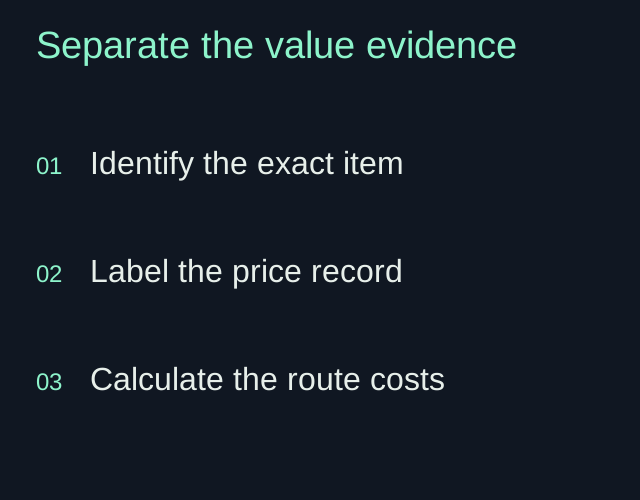
A card name is not enough to establish a comparable item. Edition, set, language, variation, physical condition and any grade can change the comparison. Where a card is graded, inspect the certification details supplied for the actual item rather than a similar promotional image. Record uncertainty instead of resolving it in favour of the most attractive comparison.
RipsFinder does not appraise individual cards, inspect slabs or guarantee authenticity. Our original collector illustrations are not real items offered for sale and carry no market value. A useful valuation exercise begins with the operator’s identified allocated item and the evidence connected to it.
Give each number a label
| Number | What it can mean |
|---|---|
| Displayed estimate | An operator or data provider’s assessment under a stated method. |
| Asking price | What a seller hopes to receive; not proof of a completed sale. |
| Completed sale | A historical transaction that still needs comparable-item and cost checks. |
| Available offer | A current offer subject to its acceptance rules and time limits. |
| Net proceeds | What remains after applicable charges and restrictions, with a separate withdrawal route if relevant. |
Do not combine these columns without explaining the conversion. A historical sale in one currency, an estimate shown in another and restricted site credit are not interchangeable amounts. A result can look profitable on screen while giving you no cash withdrawal option.
Read comparable evidence carefully
Check when a transaction took place and whether the item genuinely matches. Avoid treating an isolated exceptional sale as the usual price. Consider whether the displayed amount includes buyer charges, taxes or delivery, and whether the seller’s net receipt is visible. If those details are absent, keep them absent in your conclusion rather than guessing.
A thinly traded collectible may have few useful comparisons. That does not make the highest visible number more reliable. It makes the range of uncertainty wider. For a personal decision, it can be more useful to ask what amount you are willing to spend to own the item than to claim that its next sale can be predicted.
Work backwards from your intended exit
If you want physical ownership, calculate the decision around retrieval and delivery rather than an imagined immediate sale. If you want to sell, establish whether the relevant route provides marketplace exposure, a specific offer or another mechanism. Then check what the resulting balance allows and how money can leave, if it can leave at all.
Record the exact definition of any balance before treating it as cash. A familiar currency symbol or wallet layout does not establish equivalent rights or transfer rules.
Keep a decision record
- Identify the exact item and the date of your comparison.
- Label every number as estimate, asking price, sale or offer.
- Record currency and included or excluded costs.
- Read the balance type and any withdrawal conditions.
- Write the uncertainty next to the number, not in a forgotten note.
Do not use this process to justify spending money you need for essentials or to assume that selling a future outcome will fund another purchase. Collectibles can be illiquid, costs can change and a buyer may not appear when you want one. The purpose of a record is to make your reasoning inspectable, including a decision not to proceed.