
Map the custody relationship
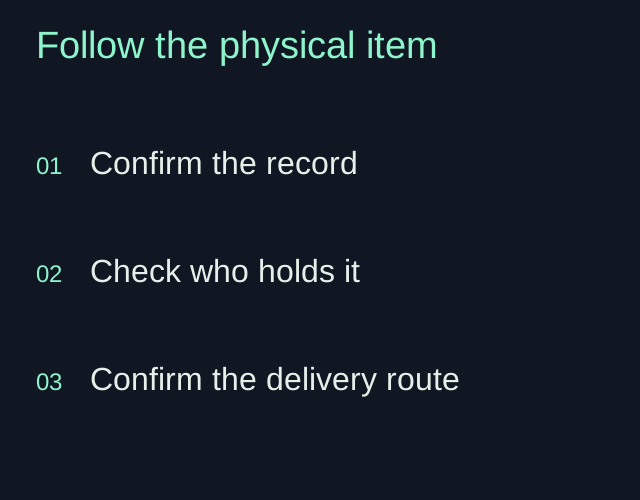
Identify who holds the physical item and how your record refers to it. Check whether the operator and custodian are the same entity, which terms explain their roles, and what records you can retain. A digital image can be useful evidence of an allocation, but it does not by itself explain the complete custody arrangement.
Look for the policy on loss, damage, storage and disputed item identity. If an insurance statement appears, read its scope and the claims route instead of treating the word insured as a guarantee for every possible problem. RipsFinder does not inspect vaults, audit insurance cover or hold any reader’s collectibles.
Read redemption as its own transaction
The right to request an item and the steps needed to complete the request are different questions. Locate the relevant redemption or retrieval instructions before opening a product. Check when a request becomes final, which item identifiers it uses and whether the collection record changes after physical delivery.
Record the custodian, item identifier, destination, quote and any unanswered fulfilment condition. A description of a retrieval process is not a guarantee that a particular request will succeed.
Resolve the address and identity questions early
- Does the current policy support the exact destination and product?
- Which identity or account checks are required before release?
- Must the delivery name and account information match?
- Which addresses or receiving arrangements are excluded?
- What support route applies if information is wrong or verification fails?
Do not plan around passing a check with another person’s identity or a location you are not entitled to use. A forwarding service can introduce its own risks and does not establish purchase eligibility, contractual permission or insurance cover. An unknown address route remains unknown until it is confirmed.
Build the retrieval-cost picture
A pack price does not necessarily include retrieval, handling, delivery, insurance, taxes or import-related carrier charges. Find which amounts the operator collects and which can arise at the destination. The distinction matters even if the card stays in custody for a while: delaying a request does not make a future charge disappear.
Ask whether combining items changes the quote and whether you are viewing an estimate or a final request. Avoid importing another customer’s shipping example into your calculation. The relevant amount depends on the actual item, destination, service and current rules. This guide does not publish a universal retrieval price.
Keep the handover evidence
Before confirming a request, retain the identified item details, the accepted quote and any stated condition or cancellation rule. After dispatch, use the operator’s shipment record and carrier process rather than social-media messages from unverified accounts. If something is missing or damaged, preserve the packaging and follow the stated reporting route promptly.
Our research can help you locate the questions and primary instructions. It cannot inspect a parcel, trace an operator’s internal custody record or provide an insurance determination. Contact the responsible operator for an actual retrieval case, and seek appropriate independent help where a dispute requires it.